Open House Lead Conversion: What’s Normal, and How to Beat It
The numbers, up front (2026):
- A typical open house draws 12–20 visitors. Capture most of them and convert ~5–8% into closed buyer clients, and that’s roughly one buyer client per open house. (Industry benchmark — verify against your own data.)
- Only about 4% of buyers found the home they bought through an open house or yard sign — yet roughly half attend open houses during their search, and about 41% use them as an information source. (NAR Profile of Home Buyers and Sellers.)
- For comparison, general internet leads convert at about 2–3%, and portal leads (Zillow, Realtor.com) at roughly 0.4–1.2%. (Industry estimates.)
- Speed is the biggest lever: contacting a new lead within an hour makes you far more likely to qualify it than waiting even 60 minutes longer. (Lead-response research; see below.)
If you’ve ever finished an open house wondering whether it was “worth it,” you’re asking the right question — just measuring it the wrong way. The open house lead conversion rate isn’t about whether someone buys that house on the spot. It’s about how many of the people who walked through eventually become your clients. And on that measure, open houses quietly outperform a lot of pricier lead sources — if you follow up. This guide is part of our complete open house follow-up system.
What is an open house lead conversion rate?
Open house lead conversion rate is the percentage of open house visitors who become closed clients. It’s usually measured across the full buying timeline — weeks or months later — not on the day of the event. A related metric, capture rate, measures how many visitors you collect as contacts in the first place; conversion measures how many of those contacts you turn into deals.
Both matter, and they multiply: a great capture rate is wasted without follow-up, and great follow-up has nothing to work with if you didn’t capture the contact.
What’s a normal open house lead conversion rate?
There’s no official benchmark, but industry figures cluster in a consistent range. Here’s what “normal” looks like for a well-run open house:
| Metric | Typical benchmark | Notes |
|---|---|---|
| Visitors per open house | 12–20 | Varies widely by market and price point |
| Contacts captured (with a sign-in) | up to ~70% | A digital sign-in captures far more than a paper sheet |
| Visitor → closed buyer client | ~5–8% | For a well-run, followed-up open house |
| Buyers who found their home via open house / yard sign | ~4% | National Association of Realtors |
| Buyers who attend open houses while searching | ~50% | National Association of Realtors |
Notice the gap between the last two rows: only about 4% of buyers found their home at an open house, but roughly half attend them. That gap is the opportunity. Most open house visitors won’t buy the house they’re standing in — but they’re active buyers, and one of them may buy a different home with whoever stayed in touch.
How open house leads compare to other sources
This is where open houses get underrated. Measured by inquiry-to-close conversion, open house leads tend to beat online lead sources — because the person showed up in real life:
| Lead source | Typical inquiry → close |
|---|---|
| Open house (captured + followed up) | ~5–8% |
| General internet leads | ~2–3% |
| Portal leads (Zillow, Realtor.com) | ~0.4–1.2% |
The catch is the phrase “followed up.” An open house lead that never hears from you again converts at roughly the same rate as no lead at all. The advantage isn’t automatic — it’s earned in the days after the event.
The one lever that beats the benchmark: speed and follow-up
If you only improve one thing, improve your response time. Lead-response research has consistently found that speed dwarfs almost every other factor. A widely cited Harvard Business Review audit of roughly 2,240 companies (2011) found that contacting a new lead within the first hour made firms about seven times more likely to qualify it than waiting even an hour longer — and about 60 times more likely than waiting a full day. Separately, the MIT / Lead Response Management study led by Dr. James Oldroyd found that reaching a lead within five minutes rather than thirty made contact roughly 100 times more likely. The takeaway is the same either way: minutes matter.
Yet the average agent takes hours — sometimes more than a day — to respond. That delay is exactly where open house leads go cold. The fix isn’t working harder on Sunday night; it’s having a system that reaches out automatically the moment the open house ends, then keeps following up on a schedule. That’s the difference between the ~2% conversion of a neglected list and the 5–8% of a followed-up one. The method is laid out step by step in the 4-touch follow-up sequence.
Beat your benchmark automatically. roostreply sends a same-day thank-you and a 4-touch follow-up sequence to every open house lead, under your name — so speed and consistency stop depending on your memory. $9/month, no CRM.
How to improve your open house lead conversion
Four changes move the number the most:
- Capture more contacts. Swap the paper sheet for a digital sign-in — it captures a far higher share of visitors, and it’s cleaner data.
- Respond the same day. Ideally within the hour for engaged visitors. Speed is the single biggest lever.
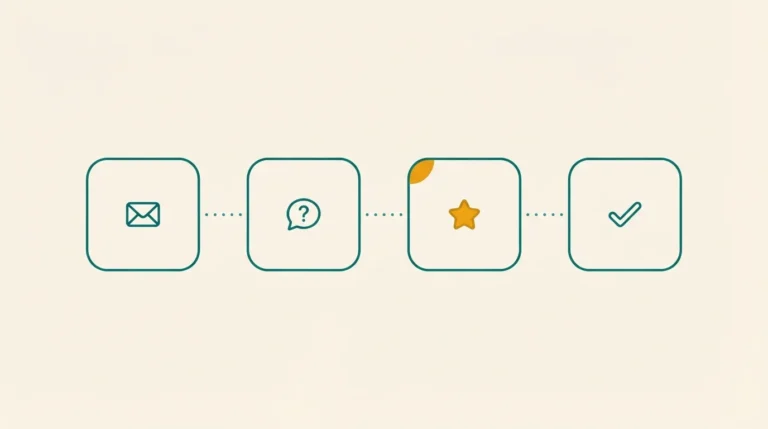
- Follow up more than once. One email isn’t follow-up. A light 4-touch sequence over a week captures the people who weren’t ready on day one.
- Stay useful, not pushy. Lead with comparable listings, market notes, and answers — not “just checking in.” Usefulness is what earns the reply.
Do those consistently and your conversion rate climbs toward — and past — the top of the benchmark range, without spending a dollar more on lead generation.
Frequently asked questions
What is a good open house lead conversion rate?
For a well-run open house where you capture most visitors and follow up consistently, converting about 5–8% of visitors into closed buyer clients is a strong result — roughly one client per open house. Rates below that usually point to weak capture (a paper sign-in) or missing follow-up, not a bad open house.
Do open houses actually generate leads?
Yes. While only about 4% of buyers find their eventual home through an open house or yard sign, roughly half of all buyers attend open houses during their search, according to the National Association of Realtors. That makes open houses a strong top-of-funnel lead source — the visitors are active buyers, even if they don’t buy the specific home they toured.
How do open house leads compare to online leads?
Open house leads typically convert better. Industry estimates put open house conversion (with follow-up) around 5–8%, versus roughly 2–3% for general internet leads and under ~1.2% for portal leads. The reason is simple: an open house visitor showed up in person, which signals more intent than an anonymous online form fill.
How can I improve my open house conversion rate?
Capture more contacts with a digital sign-in, respond the same day (ideally within the hour), follow up multiple times with a light sequence, and keep every message useful rather than pushy. Response speed and consistent follow-up are the two biggest levers — most missed conversions come from slow or single-touch follow-up, not from the open house itself.
Written by the roostreply team. roostreply is the follow-up tool built for solo real estate agents — turn open house leads into clients, automatically, without an expensive CRM. Last updated: July 19, 2026. Figures are drawn from the NAR Profile of Home Buyers and Sellers, the 2011 Harvard Business Review lead-response audit, and the MIT/Lead Response Management study (Dr. James Oldroyd); conversion-rate ranges are industry estimates — confirm current sources before relying on any single number.